



Marketing’s evolved from mass blasts to data-driven personalization. Yet email—that “decades-old” tech—still outshines Instagram and TikTok. Even with flashy new channels, it remains the communication king. Ludicrous? Not really.
A study shows 80% of retailers rank email marketing as the top retention tool (vs. 44% for social).
It’s perfect for reclaiming lost carts. Ready to win them back? Dive into these 8 Abandoned Cart Email Best Practices.
8 Abandoned Cart Email Best Practices + Examples
Implement Omnipresent Marketing
Abandoned cart emails are effective when it comes to recovering revenue, but they’re even more powerful when combined with other marketing strategies. Omnipresent marketing is about communicating with your customers across channels in different ways based on how they interact with each channel – and how they’ve interacted with previous brand messages.
Imagine running an ecommerce store for household appliances. A visitor gets a 20% off first-purchase popup, browses, adds to cart—but abandons. 24 hours later: cart abandonment email ignored. Enter omnipresence: next Facebook scroll shows that exact product ad. Be everywhere your customers are.
Abandoned Cart Email Playbook
Turn abandoned carts into revenue with plug‑and‑play recovery flows, timing templates, and copy frameworks for ecommerce brands.
Humanize Your Abandoned Cart Emails
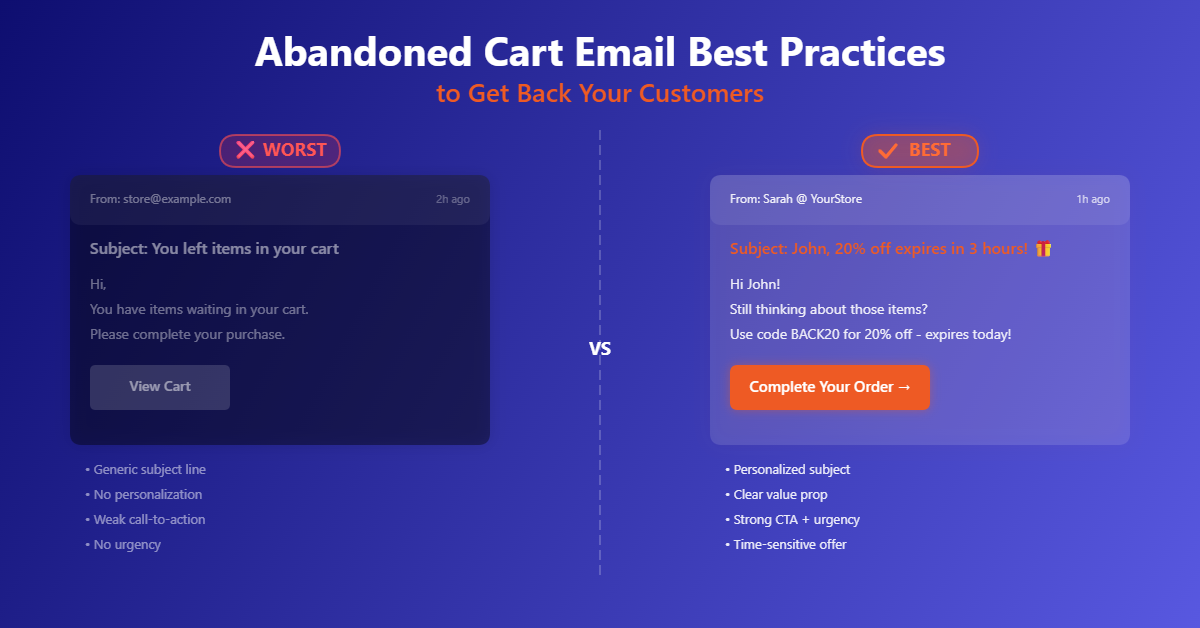
Humanizing your emails is a lot more than personalization. Here’s how you can give a humane touch to your emails.
- The sender’s name and address should be included to build credibility and trustworthiness in the users. No reply to the name must be avoided.
- Don’t be so mechanical, but follow a one-to-one email style. The email should sound personal, and the recipient should be able to relate to it. Checkout Harvard Business Review insights on the words and phrases that you must use while writing your email.

- Add context or create relevance to your email messages.
- Go further than first-name personalization and create email messages based on selected user segments.
- Create a follow-up email series.
- Provide options to reach out for assistance through email or by contacting customer support executives.
Use Data to Drive Your Email Campaigns
In TargetBay, we treat data as a potential asset and leverage it to improve our email campaigns. I would like to use a framework called Trinity—created by Avinash Kaushik—to explain how marketers should use data. The trinity is a simple, holistic approach that helps marketers to identify actionable insights and metrics.
There are 3 elements to Trinity, which can help you organize your email data. The first element is “Behaviour Analysis”, which answers the most basic questions about your abandoned cart email campaigns.
- What is your email open rate?
- What is your email CTR?
- What links in your email get the most clicks?
- What time do recipients open your email?
The second element ” Outcome Analysis”, gives insights into your campaign results.
- How many people completed their purchase?
- What is the average campaign revenue?
- What is the average revenue per subscriber?
- What is the average campaign ROI?
One of the major pitfalls of using data in email marketing is not being able to understand the customers’ hidden motivations. In other words, what drives their specific behaviors? This is why the final element, “Experience Analysis”, is relevant. This element allows you to comprehend why the recipients of your campaigns do what they do. It answers some of the difficult questions, such as:
- Why do some email campaigns perform better than others?
- Why are you falling behind your subscription rates?
- Why is your email campaign revenue getting lower during certain months of the year?
One of the critical success factors of an abandoned cart email campaign involves data-centered segmentation based on customers’ behaviors and interests. This is exactly why it is necessary to fill the knowledge gaps you have about your target audience and previous campaigns. Hopefully, with the help of a framework like Trinity, marketers can better organize and make sense of the data they collect.
Implement Accelerated Mobile Page (AMP) features
Sending a recovery email with a discount code is how retailers typically address the cart abandonment issue. This might work at times, but in the long run, this is just a band-aid solution. Offering a discount might work well with price-conscious shoppers; however, it doesn’t help much when it comes to shoppers who abandoned their cart due to complex checkout or technical issues.
With AMP, retailers can improve their UX and streamline the entire checkout process. Being AMPed means that your email will be more interactive. In fact, it will look and function similarly to your landing page. Here’s what an AMP-powered abandoned cart email will look like.
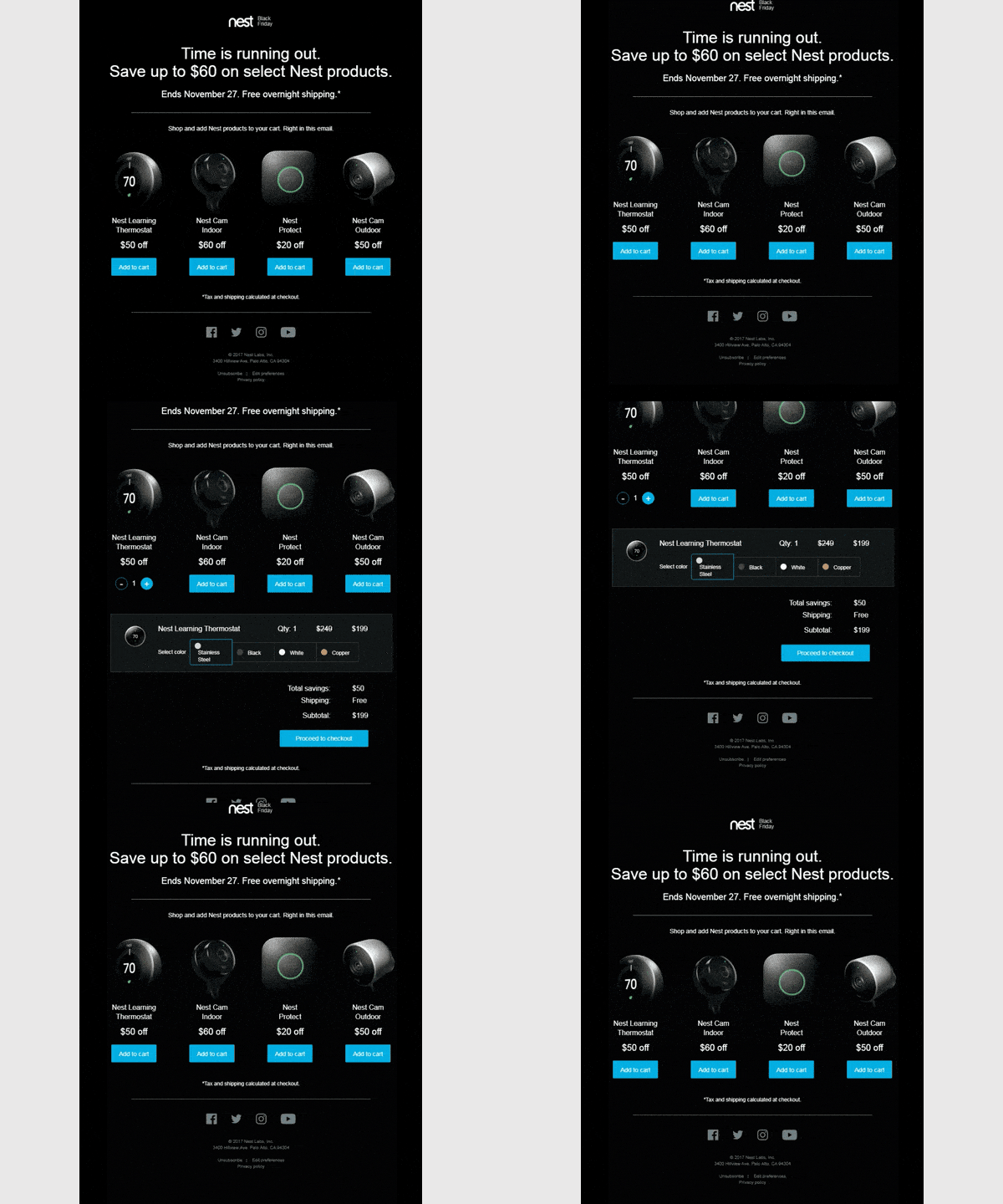
AMP helps e-commerce brands to deliver the whole checkout process directly to the email inbox. Instead of trying to convince the consumer to revisit your website’s checkout flow, which has already failed them once, you can provide a new, more straightforward route to complete the purchase instead.
Let Your Emails Reflect Empathy
Drafting empathetic emails begins with asking yourself a specific question: “How good is your understanding of your customers?” This is crucial as your messages should resonate with them. For us, the marketers at TargetBay, empathy is about prioritizing the customers’ needs while sending out an email campaign. That means your emails shouldn’t just serve the purpose of a brand. There must be a way to incentivize the recipients to read your emails. It all comes down to balancing self-promotion with true customer benefits.
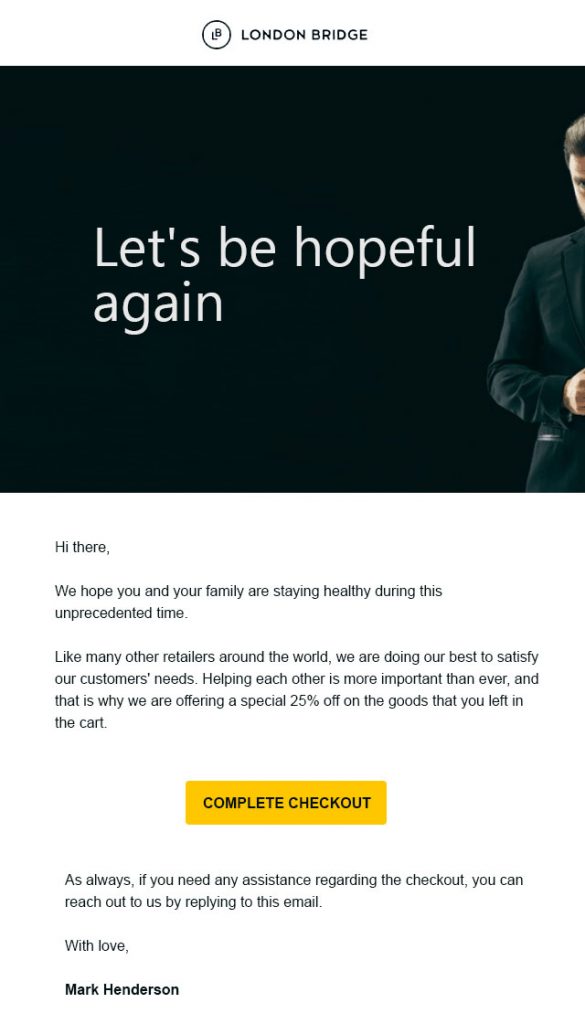
Also, the colors and images you use to design your email play a crucial role in evoking emotion in your customers.
Abandoned Cart Email Playbook
Turn abandoned carts into revenue with plug‑and‑play recovery flows, timing templates, and copy frameworks for ecommerce brands.
Focus on the Email Header
This might seem like an aggrandizement, but it’s not. An email header is the most important visual aspect of your email campaign. It has got the most important task of all — to grab the attention of the recipient as soon as they open your message. Studies have revealed that an average person receives 121 emails per day. So, the question is how many such emails go unnoticed?
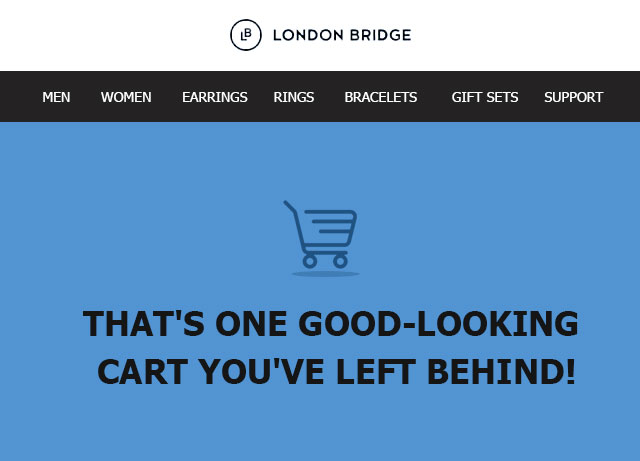
You will only have a few seconds to get your recipients interested in your email. This means that the email header shouldn’t be out of context or vague. Now, what do you need to do? Well, you need a clear understanding of what your banner might look like. Also, you need your logo to be recognisable so that your audience will remember you. Finally, the message should be straightforward but compelling enough to catch the recipients’ attention. Here’s an example:
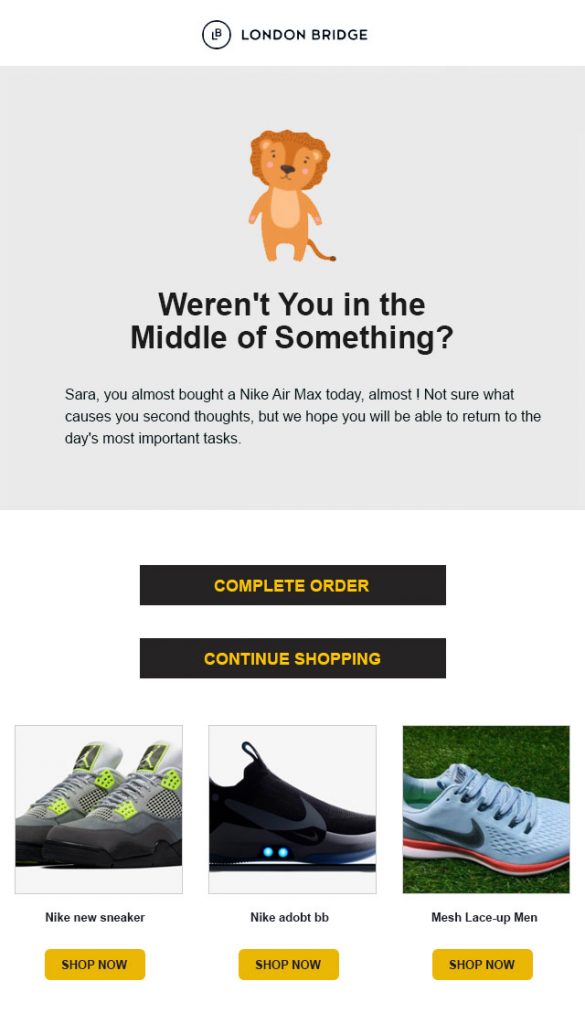
THAT’S ONE GOOD-LOOKING CART YOU’VE LEFT BEHIND!
Build a Marketing Funnel
Successful marketing is integrating different channels, creating a funnel that allows various assets to work together. Suppose you are selling attire online. The primary marketing requirement is to identify a target segment. Once you’ve done that, you need to build an email list to establish communication. In order to do that, you need to create a landing page and drive traffic to it. Furthermore, you will have to offer discount codes or lead magnets to get the users to sign up.
I guess I’ve made the point. The process goes on and on, and it’s easy to lose one’s way. This is why marketing funnels are of paramount importance. It helps marketers organize their marketing channels together more effectively, keep track of their business goals, and improve their conversions.
Here’s an example of what kind of assets could go into your marketing funnel:

Carefully Examine Your Email Marketing Options
Email marketing is a big deal, and whether your objective is to engage with existing customers or new prospects, you need an email marketing software that can help you manage your lists, communicate, and campaign effectively. Here are a few important things to consider while choosing an email solution.
- Choose an email marketing platform that integrates seamlessly with your CRM software.
- Make sure the platform supports mobile-optimization.
- Ensure the platform enables you to send automated responses or aggregate customer responses into tickets.
What’s Next? Get Started
Cart abandonment plagues ecommerce even with tech advances. It’s inevitable—shoppers show purchase intent but bail at checkout amid endless options. Enter cart recovery strategies: your backup plan in a chaotic digital world.
Pick one from this article and implement it this month. Recovery wins come incrementally—slow down, stay consistent, never quit.
If you don’t have an existing email strategy to recapture your abandoned shoppers, our pre-built abandoned cart email templates are a great place to start.
Abandoned Cart Email Playbook
Turn abandoned carts into revenue with plug‑and‑play recovery flows, timing templates, and copy frameworks for ecommerce brands.