



⭐ Quick Summary
👋 “Welcome” builds trust fastest: “Welcome” is the safest lead, used in 13,983 subjects across 20,292 emails, because it instantly clarifies intent without spammy overtones.
👉 Direct address increases relevance: Direct address works, with 4,172 subjects using “You/Your,” especially when paired with a concrete benefit like a discount, guide, or free shipping.
🧠 Curiosity drives opens: Exclusivity and curiosity help when authentic, shown by 479 subjects using “Inside” and 119 brands framing a question to prompt the open.
✂️ Short subjects win on mobile: Keep it tight. The most common length tier hovers around 33 characters with a 5.8-word average, and 2,990 subjects go sub-20 characters for mobile clarity.
😊 Emojis help when used carefully: Emojis can lift visibility without extra words, supported by 6,307 subjects using them, but restraint and relevance are critical to avoid spam signals.
New subscribers make up their minds fast. If your first email misses the mark, you lose attention, future opens, and revenue before the relationship even starts.
The good news is there’s clarity hiding in the numbers.
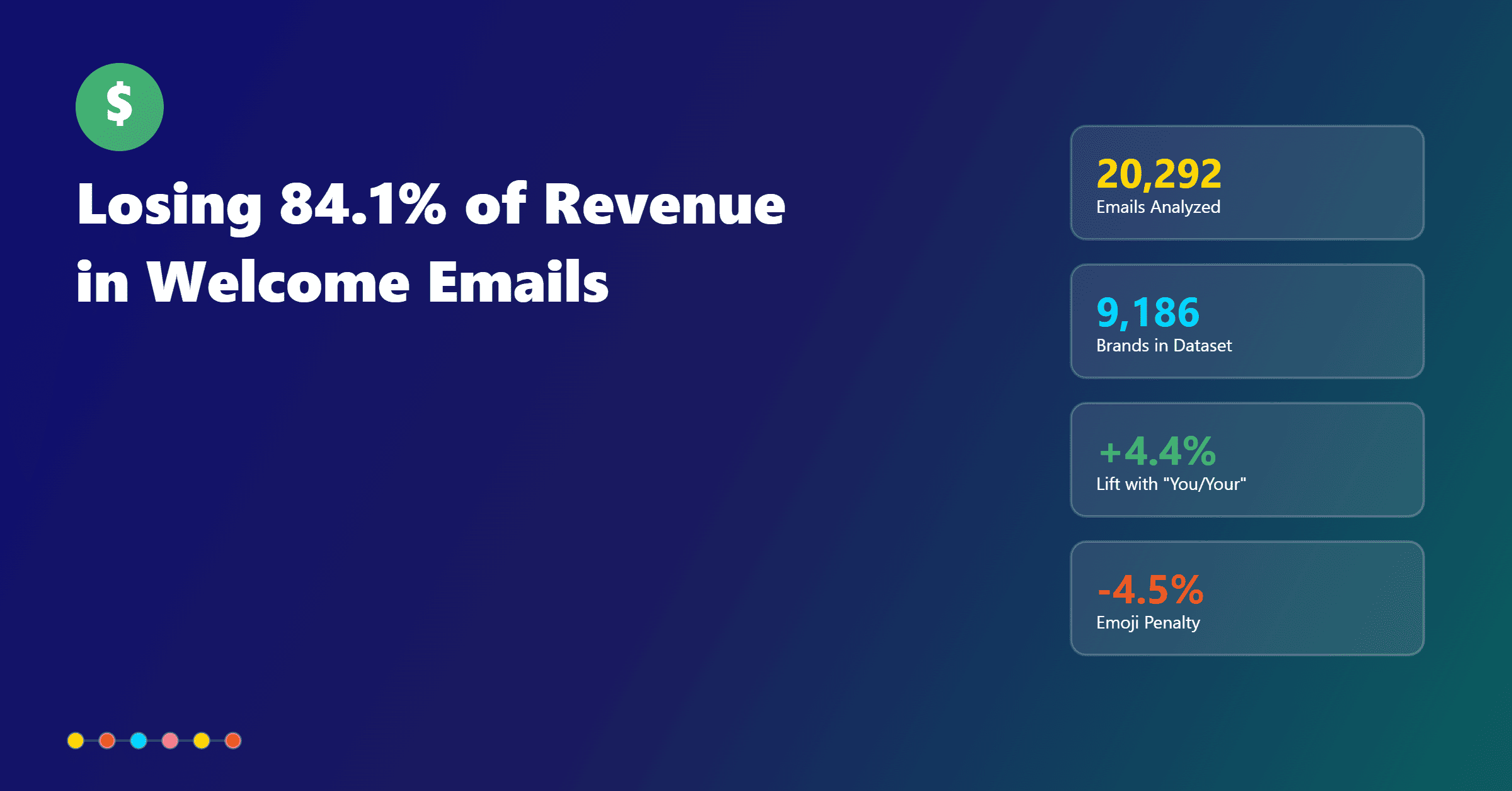
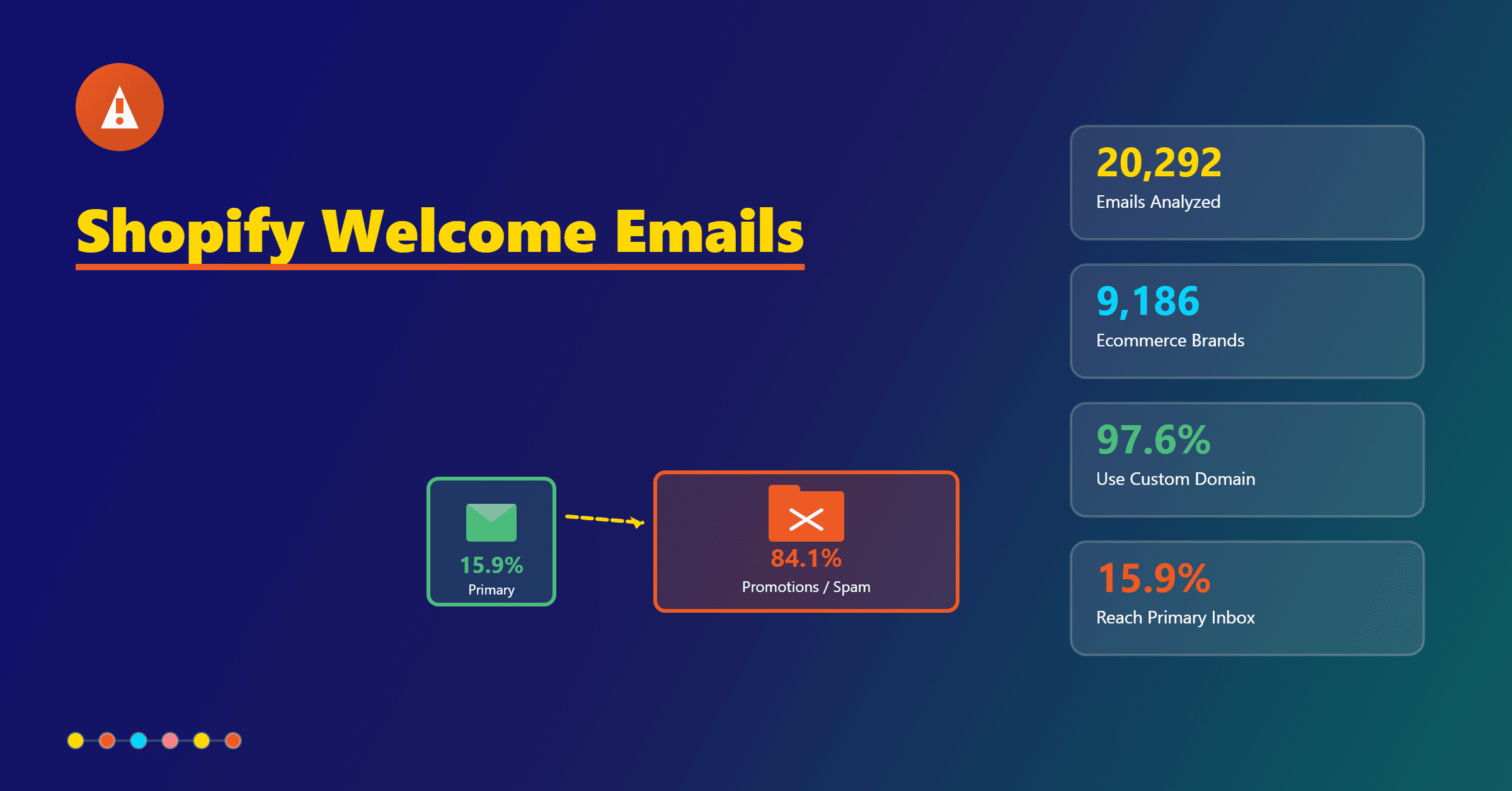
We analyzed 20,292 welcome emails from 9,186 brands to benchmark what actually gets opened.
The data reveals clear patterns in words, length, and visuals you can use right now to optimize your welcome email subject lines and turn new sign-ups into engaged buyers.
What the dataset reveals
This dataset spans 20,292 emails sent by 9,186 brands, giving a reliable view of how marketers approach welcome campaigns.
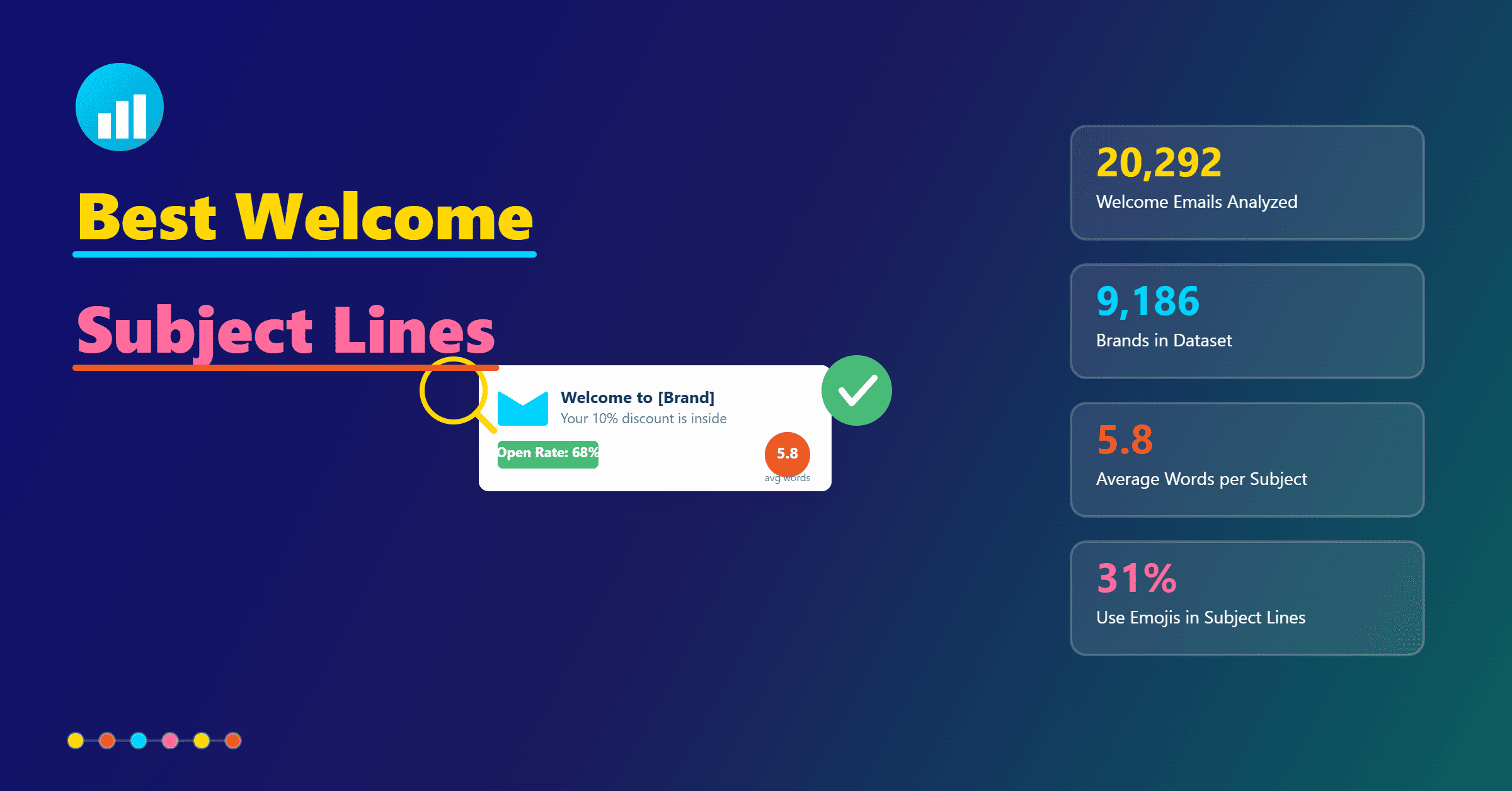
Across all messages, the average subject line length comes in at 5.8 words, which pairs well with mobile preview limits and fast-scanning inbox behavior.
The most common length tier centers near 33 characters, with 12,253 emails living in that “medium” band.
At the extremes, 2,990 subjects stay under 20 characters, pointing to a meaningful minority betting on minimalist clarity for mobile.
Visuals show up often, too, with 6,307 subjects using emojis to draw attention without extra words.
Language patterns also emerge. A massive 13,983 emails lead with “Welcome,” 4,172 use “You/Your” to directly address the reader, 479 add “Inside” to signal exclusivity, and 119 brands try question-based formats.
Urgency is present but measured, with 136 brands using “Now” and 90 using “Today.”
Start smart: “Welcome” + direct address
Lead with “Welcome”
“Welcome” is the undisputed starting point. In 13,983 emails, brands chose to lead with it because it’s simple, fast, and instantly context-rich.
It clearly signals a first-touch message, reduces friction, and avoids spammy ambiguity.
You can vary tone without losing clarity. Try adding a value hook after “Welcome,” highlighting a first-order perk, special access, or the next best step.
Keep it short, keep it crisp, and keep the promise specific.
Add direct address
Direct address deepens relevance. In 4,172 subjects, brands used “You” or “Your” to make the welcome email personal and action-oriented.
This approach boosts clarity, especially when combined with the first benefit a subscriber cares about.
You can blend “Welcome” and “You/Your” naturally. If you use first-name personalization, keep it clean and test carefully.
A misfired merge tag can hurt trust more than it helps urgency.
Spark exclusivity and curiosity
Use “Inside” for access vibes
Exclusivity works when it’s authentic. In 479 emails, brands used “Inside” to suggest gated value or members-only content.
This word carries weight without shouting urgency, and it helps frame the welcome email as a doorway rather than a generic hello.
Pair “Inside” with a clear benefit. Make it obvious what’s behind the metaphorical door: a starter discount, a style guide, an onboarding checklist, or a loyalty perk.
The more specific the promise, the higher the chance of a confident open.
Frame the subject as a question
Questions trigger curiosity when the answer feels valuable. Our dataset shows 119 brands using a question in their welcome subject line.
The key is to avoid vagueness and point directly to a benefit or next step.
Keep questions short and self-explanatory. If readers have to work to decode the ask, they’ll skip it.
Match the question with a relevant preheader that completes the thought.
Drive action with urgency (use sparingly)
Urgency can help, but too much reads like spam. Only 136 brands leaned on “Now,” and 90 used “Today,” which suggests marketers use time pressure selectively for welcomes.
That restraint makes sense: subscribers just signed up, so over-aggressive countdowns can feel premature.
Use urgency when a real benefit expires or when timeliness is normal for your category.
Tie “Now” or “Today” to a clear incentive like a limited-time discount or fast-start bonus.
Then deliver exactly what you promised inside the email.
Nail the length and structure
Length matters because phones truncate subjects quickly. The most common length tier we observed clusters around 33 characters, with 12,253 emails living in that zone.
That target tends to show well on mobile while still allowing one strong hook.
Word count also aligns with scannability. Across 20,292 messages, the mean subject is 5.8 words.
Working in the 5–6 word range forces clarity. If you regularly exceed 9–10 words, your key value will likely get clipped on smaller screens.
There’s also room for extreme minimalism. A notable 2,990 subjects used fewer than 20 characters.
This approach works when your brand is well known, or your message is laser-focused, like “Welcome + perk” or “Your gift is inside.”
With ultra-short subjects, the preheader becomes crucial to add context.
Aim for simple structures like “Welcome + benefit,” “You/Your + perk,” or “Inside + value.” If you add your brand name, do it only when it clarifies who you are or adds social proof.
Otherwise, spend your characters on the benefit that drives the click.
Use visuals wisely
Emojis can pull weight without eating characters. In this dataset, 6,307 subjects use at least one emoji to stand out.
The best use cases align the emoji to the benefit, not just decoration.
A gift for a discount, a star for membership, or a sparkle for “new here” can all work.
Place emojis at the end of the subject for a cleaner scan, or between clauses to separate ideas.
Avoid stacking too many or mixing unrelated icons.
Also, keep deliverability in mind: a single relevant emoji is unlikely to affect inbox placement, but a string of symbols can look spammy.
Practical templates and welcome email ideas
Every list is different, so think in repeatable patterns, not one-off guesses.
Below are data-aligned templates and welcome email ideas for common e-commerce scenarios.
Adjust the benefit to your offer, keep to the 5–6 word sweet spot when possible, and test one variable at a time.
New customers and subscribers
Start with “Welcome” and a direct benefit. Add “Inside” when you gate perks or guides.
Sprinkle in questions or light urgency only when it fits your promise.
Reactivations and “welcome back”
Returning customers want recognition plus a reason to re-engage. Keep copy grateful, direct, and concise.
New employee intros (brand-forward welcome)
When stores spotlight new team members in welcome sequences, tie it to service and credibility.
Keep the subject personal but benefit-first.
Brand introductions and story-led welcomes
Use these when your differentiator is product quality, sourcing, sustainability, or community.
Curiosity and “Inside” work well here.
Minimalist, mobile-first variants
For fast scanners and narrow previews, test sub-20-character lines. Pair with preheaders that add context.
Testing and iteration made practical
Use A/B testing to validate one variable at a time. Compare “Welcome” versus “You/Your,” test “Inside” against a direct benefit, and explore a single emoji at the end of a proven subject.
Keep the rest of the email identical to isolate the impact of the subject line.
Time your tests to subscriber behavior. If most sign-ups happen evenings or weekends, schedule welcome emails to reach inboxes when readers can act.
Combine subject tests with preheader variations to reinforce your core promise and prevent truncation from hiding key value.
Deliverability and sender reputation
Great subject lines fail if they never reach the inbox. Avoid excessive capitalization, long emoji chains, and hyperbolic claims in your first touch.
Welcome emails should feel helpful, calm, and brand-right.
Use authentication standards like SPF, DKIM, and DMARC. Keep your sending domain consistent.
Prune inactive sign-ups with re-permission campaigns, and set expectations clearly on your opt-in forms.
Better list quality grows open rates more sustainably than any single word choice.
How TargetBay can help you scale what works
If your team needs speed and consistency, unified tools matter. TargetBay Email & SMS lets you build automated welcome flows, test multiple subject line variants, and use the AI email agent to launch data-aware campaigns faster.
When you pair these emails with TargetBay Reviews, your welcomes can spotlight real photo and video reviews that build instant trust. Add TargetBay Rewards to introduce points, VIP tiers, or referral perks in the first touch, turning a hello into a long-term retention play.
The combination gives you a clean way to run ongoing subject line experiments, pull social proof into your first impressions, and make every welcome email feel valuable from the start.
Final thoughts
Welcome emails should feel like a service, not a sales push. When your subject line promises a tangible next step, and your preheader completes the thought, new subscribers reward you with attention and action.
The data here gives clear, testable patterns for welcome email subject lines and practical welcome email ideas you can roll out this week.
If you want a faster path from insight to execution, TargetBay brings your workflows together.
Use TargetBay Email & SMS to automate welcome flows and test subjects, TargetBay Reviews to add high-converting social proof to your first touch, and TargetBay Rewards to introduce loyalty from day one. The most effective welcome programs are repeatable, measurable, and easy to maintain, and unified tools make that possible.